Google DeepMind unveils Gemini Robotics 2.5
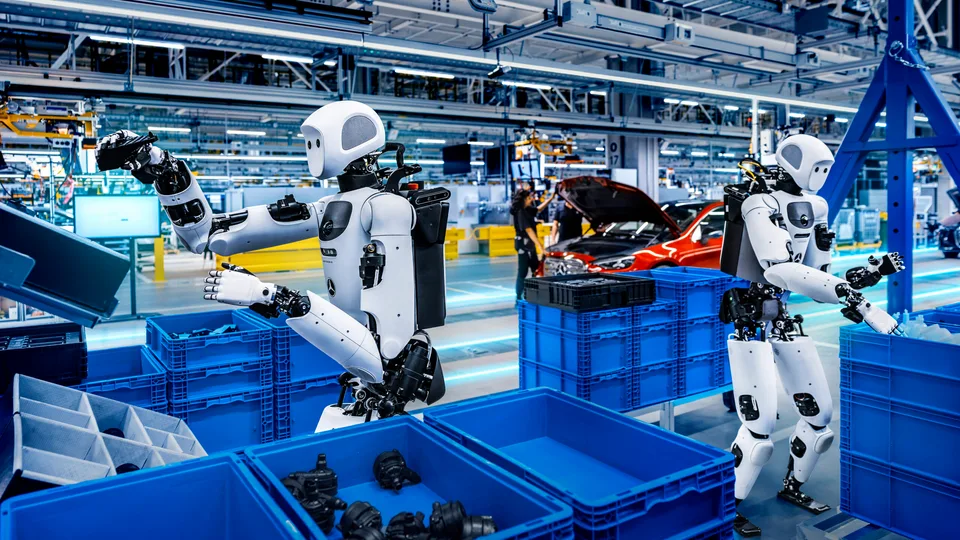
Google DeepMind has unveiled Gemini Robotics 2.5, an AI model for controlling robots. Google says robots using it reached a 96 percent success rate when sorting automotive parts at Mercedes-Benz factories.

Google DeepMind has unveiled Gemini Robotics 2.5, an AI model for controlling robots. Google says robots using it reached a 96 percent success rate when sorting automotive parts at Mercedes-Benz factories.

Google DeepMind tested Gemini Robotics 2.5 on more than 200 activities, from handling food with tongs to operating a pipette. Google reports success rates 30 to 100 percent higher than the previous version and speeds 20 to 30 percent faster in laboratory tests.
Outside the laboratory, Apptronik Apollo 2 robots used the model to prepare automotive parts at Mercedes-Benz factories in Europe. Their 96 percent success rate remains a proof of concept for repetitive preparation work, rather than evidence that they can replace a full shift.
The AI model turns camera views and language instructions into robotic movements. During training, Gemini 4 Argon generated thousands of simulated practice variations from real camera data, which DeepMind combined with physical demonstrations.
Gemini Robotics 2.5 is available to Google's robotics partners but is not generally available. It also runs on cloud servers, so builders assessing factory automation still need to account for latency as well as the remaining reliability gap.
Reliable full-shift operation remains unproven, so the factory result is not yet a basis for assuming human work can be replaced.
Restricted partner access means most builders cannot yet test the model against their own workflows.
Cloud dependence makes response time a practical constraint that laboratory accuracy gains alone do not resolve.
Written automatically by the Made in 10 Newsroom from the source above.

Google has opened Gemini 4 Carbon to paying business and developer customers, with access also rolling out for Google AI Ultra subscribers. The AI model targets harder coding and research tasks, but longer reasoning can make each task cost more than with Argon.

Kora Systems has unveiled a Linux-based desktop operating system built around AI models and agents, with launch planned for 2027. It is designed to let agents work across applications and files while retaining context between tasks.

ByteDance has released Seedream 5.5, an AI image model rolling out through its Chinese apps and cloud. ByteDance says it preserves unchanged parts of a picture across 100 rounds of editing, but its performance claims remain unverified.